Your socks are wet before you reach the bottom stair. Water lies across the basement floor, the carpet squelches with every step, and somewhere a pipe, a sump pit or a window well is still feeding it. Emergency water extraction is the first job in any water damage restoration in Toronto: getting the standing water out of the building before it wicks up the drywall, soaks the pad and works into the framing. The longer it sits, the more of the house turns from a wet floor into wet material, and the repair grows with it.
Before anyone touches anything, stop the source if you can. Shut the main water valve, usually near the front wall of the basement where the line enters the house. If the water is deep enough to reach outlets, baseboard heaters or the furnace, stay out of it. Switch off power to the wet area only if the panel is dry and you can reach it without stepping in water, otherwise leave the electrical alone and call us. Lift boxes, electronics and valuables off the floor, and take photos of everything before it is moved.
Water comes in three categories, and the category decides how we work. Category 1 is uncontaminated supply water, such as a broken pipe or an overflowing tub. Category 2 is grey water with some contamination, like a washing machine discharge or a dishwasher leak. Category 3 is the serious one: sewer backup, river water or storm surge that has come up through the floor drain. Category 1 water left sitting for a day or two can slide into Category 2. Category 3 needs extra handling and protective gear, and porous materials it soaked usually have to come out. We tell you which category we are dealing with before we start.
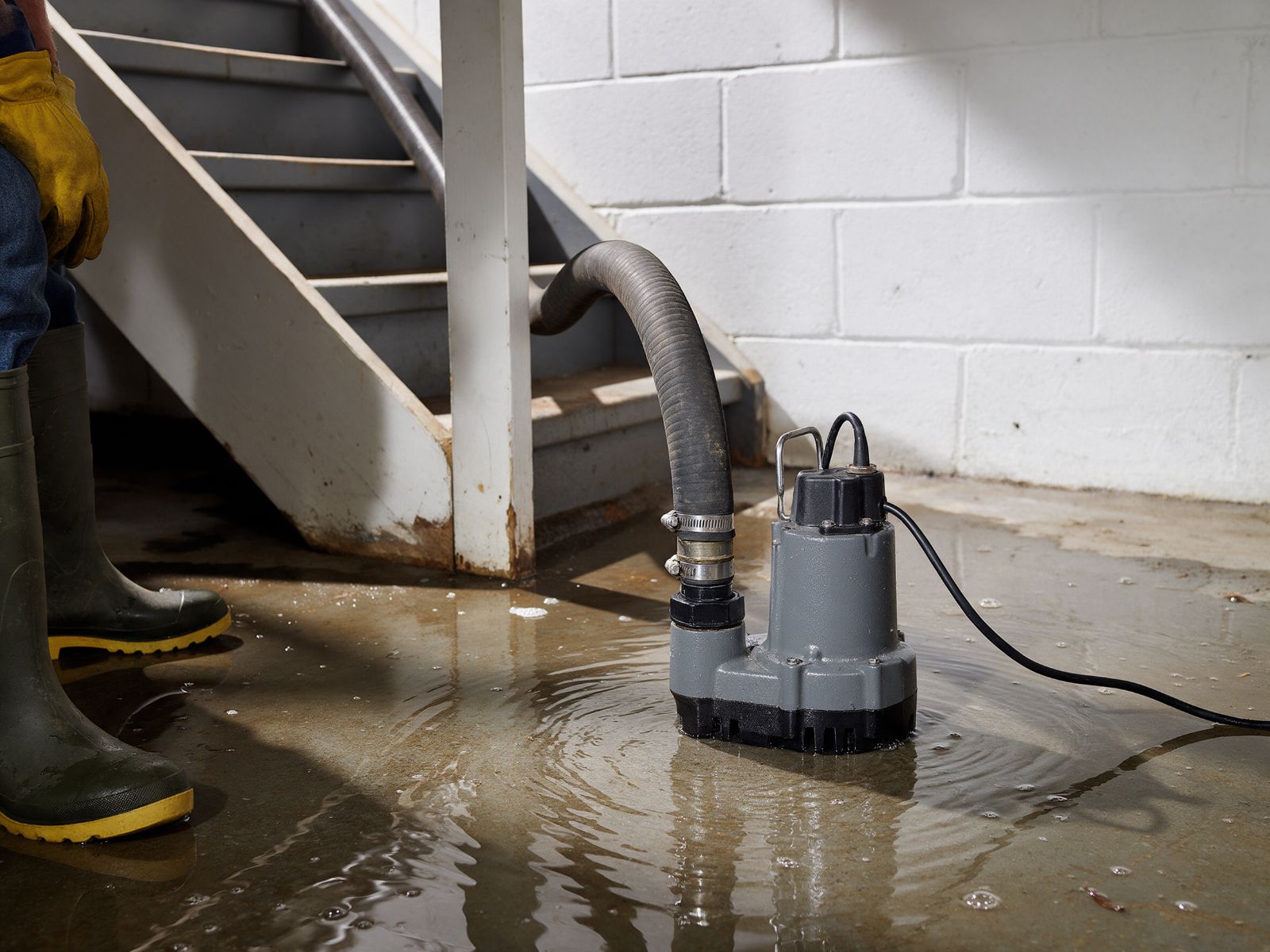
For standing water we start with submersible pumps, which can lower several inches of water quickly and send it out through a hose to a drain. Once the pump starts sucking air and only a thin film remains, we switch to extractors. A truck-mount unit stays outside and runs a long hose through the door, giving the strongest suction and the longest reach. Portable extractors come down the stairs into tight basements, condo units and anywhere a hose cannot reach. We choose between them based on how much water there is, how far the hose has to run and what floor is underneath.
Extraction from carpet and underpad is where this job differs from a mop and a wet vac. A saturated pad holds litres of water that the carpet fibres hide. We use a weighted extraction wand to press water up out of the carpet and pad in overlapping passes until what comes back is minimal. Sometimes the carpet is lifted, the pad is thrown out and the carpet is dried separately. This is water extraction, not carpet cleaning: we are not treating stains, we are removing the volume of water so the drying equipment has something manageable to work on.
A typical visit goes in a set order. We assess the depth of water, its category and the likely source. We protect what can be saved by lifting furniture onto blocks and setting contents aside. Pumps go in first, then extractors on hard floors and carpet. Next we use a moisture meter and thermal camera to find where the water went beyond the visible floor: behind baseboards, the bottom of wall cavities, under vinyl or laminate. Materials that cannot be saved come out, and the drying plan is set up. Photos and moisture readings are documented as we go, which is what you will want for your home insurance claim.
Several things drive the price of extraction. How much water there is and what category it is. How many square feet are wet. How much carpet, pad and flooring is soaked. How long it has been sitting. How hard the access is: a steep basement stair, a finished lower level, a condo unit on a high floor with a long carry from the elevator. And how many hours of pumping and extraction the job needs. We explain the price on site before work starts, once we have seen the space, so there is nothing to react to afterwards.
Treat it as an emergency when water is still entering the house, when it is deeper than a few centimetres, when it came from a toilet, sewer line or floor drain, when it is near the electrical panel, or when it has reached carpet or finished walls. A small spill on a tile floor that you can mop up is a different matter from a basement with water across the whole slab. If you are unsure, call and describe what you see. The sooner extraction starts, the less drywall and flooring has to be cut out later.
Toronto has a flooding history that shapes this work. After heavy storms such as the flash floods of August 2018 and July 2024, water pushed up through basement floor drains in older neighbourhoods where combined sewers carry storm and sanitary flow in one pipe. Brick semis and detached houses from the early twentieth century often sit on stone or block foundations with low basement floors, so water collects in one corner and spreads quickly. Pumping out is the same job anywhere in the GTA, but in these houses we check the floor drain and the lowest wall first.
From our crew: Lift the corner of the carpet along an outside wall and press down on the pad with your hand. If water wells up around your fingers, the pad is holding far more than the surface shows. Do this before you decide it is just damp.
Extraction removes the water you can see, not the water inside the materials. After it comes Structural Drying, with low-grain refrigerant dehumidifiers and air movers, and where a basement keeps flooding, Basement Flood Repair deals with how the water got in. A plumber is the person to call if a pipe needs mending, and a mould specialist if growth is already visible. If water is on your floor right now, call (226) 639-7972. We answer 24 hours a day, 7 days a week, across Toronto, Mississauga, Brampton, Vaughan, Markham and the surrounding GTA.
Water Extraction Services We Offer
✓Standing Water Pump-Out
Submersible pumps clear deep water from basements, crawl spaces and garages and send it to a suitable drain.
✓Carpet and Pad Extraction
Weighted wands press water out of carpet and underpad. The pad is usually removed, the carpet is lifted and dried.
✓Hard Floor and Subfloor Extraction
Water is drawn from laminate, vinyl, tile and engineered flooring edges and from the subfloor below before it swells.
✓Category 2 and 3 Water Extraction
Grey water and sewer backup are extracted with extra handling and protective gear, and wet porous materials are removed.
How it works
- 1
Stop the source and assess
We confirm the water is shut off, check the electrical risk, and measure depth, category and the likely source before any equipment goes on. Anything near the panel is flagged first.
- 2
Pump out standing water
Submersible pumps lower the water level fast, with hoses run to a suitable drain, until only a thin film is left on the floor. Hose runs are checked so nothing discharges where it should not.
- 3
Extract floors, carpet and pad
Truck-mount or portable extractors pull remaining water from the slab, carpet and underpad, and wet pad and unsalvageable material are removed. The aim is to leave nothing pooled behind.
- 4
Map the moisture and hand over
Moisture meter and thermal camera readings show where water travelled. We document it and set up the drying plan for the next stage. You also get photos for your records.
Pricing
Cost depends on how much water there is, its category, the square footage that is wet, how long it has sat and how hard the space is to reach. The price is explained on site before work starts.