
Press a thumb into the bottom of the wall and it feels like a damp sponge. The baseboard may have lifted, the paint may be bubbling, or there may be a tide line a few inches up the board after a basement flood or a leak from the floor above. Drywall behaves like a wick. Water that touched only the bottom inch climbs the paper face and the gypsum core, often well past what your eye can see, so a wall that looks fine at knee height can still be wet at hip height.
Stop the source first. If a pipe is feeding the water, shut the main water valve, usually near the front wall of the basement where the line enters the house. Stay out of standing water if outlets or power bars sit near the floor, and switch off power to the wet area only if the panel is dry and you can reach it safely. Take photos before anything moves. Then pull furniture and boxes away from the wall so air can reach it. Please do not paint, caulk or tape over a damp wall, because that seals the water in.
When we arrive we read the wall before we touch it. A moisture meter gives readings at several heights, and the thermal camera shows the wet zone as a cooler patch behind the paint, so we can see how far the water actually climbed. Readings and photos are logged for your insurance claim. The first real decision is dry in place or remove. Painted drywall that got wet from clean supply water, caught within a day or two, with no insulation behind it, can often be dried where it stands using air movers and low-grain dehumidifiers.
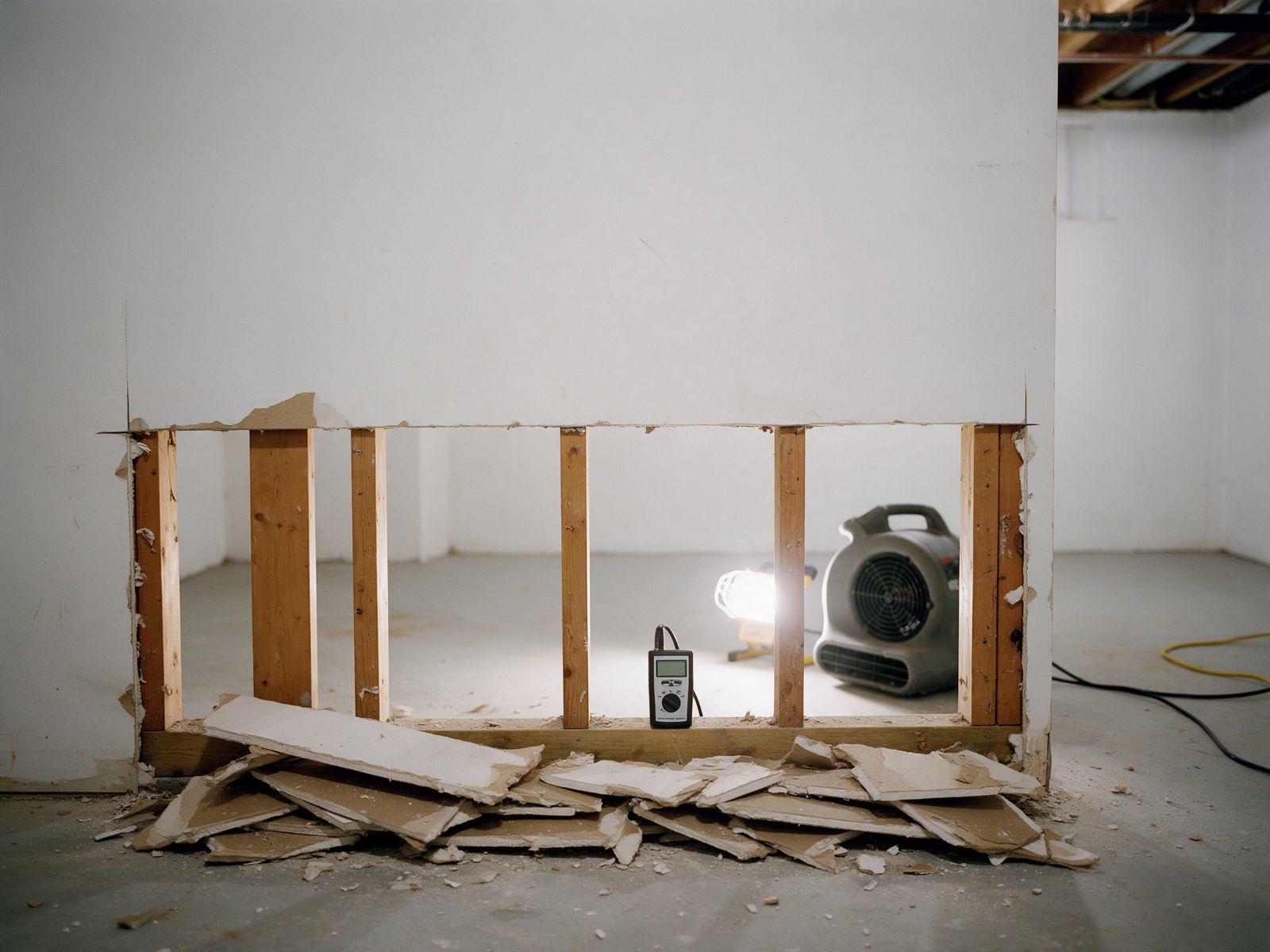
Removal means a flood cut, a straight horizontal cut made above the highest wet reading. We cut at 2 feet when the wicking stops there, and at 4 feet when the moisture has climbed higher or when a full 4 foot sheet gives a tidier break. The cut is set to land on a stud so the new board has something to screw into. Baseboard comes off first, and we keep it if it is worth reusing. Wet batt insulation behind the cut is bagged out, because it holds water against the studs and will not dry in any sensible time.
Several things push a wall from dry in place to remove. Water from a toilet overflow, a sewer backup or the ground outside is not clean water, and that drywall comes out however dry it feels. Board that has sagged, crumbled at the edge or gone soft is finished. Spray foam or a vapour barrier behind the sheet traps moisture inside. And time matters as much as material: wet paper facing starts to grow mould within days, and anything with visible growth needs a mould specialist, which is not something we do.
Once the board is cut away, the stud cavity is open to air. Air movers are aimed along the wall face and into the cavity, a dehumidifier pulls moisture out of the room, and we check the studs and the bottom plate with the meter every day. This is the Structural Drying part of the job, and it is the step people skip when they hurry to patch. New drywall hung against a damp stud will stain and swell within weeks. Readings are logged daily until the framing reaches dry standard, and only then do we call it ready to close up.
After the framing is dry, new insulation goes back wherever it was removed, and new drywall is hung and taped. Seams are filled, sanded and primed so the wall is ready for paint. A straight flood cut at 4 feet is easier to blend than a ragged hole, and painting a wall corner to corner hides the patch edge better than spot painting. Textured walls take extra care to match. At the site visit we agree how much of the finishing you want us to handle, so the scope is clear before work starts.
Price follows the wall, not the room. It depends on how many linear feet are wet, how high the water climbed, whether insulation has to come out, whether trim can be reused, how many days the equipment runs and how much finishing you want done after drying. A short dry in place job costs far less than a full perimeter flood cut in a finished basement. We explain the price on site before work starts, once the readings show which kind of job you have.
Treat it as urgent when water is still running, when the source was a sewer backup or ground water, or when the board is already sagging. In older Toronto brick semis and bungalows, finished basement walls are often framed tight against stone or block foundation with little vapour protection, and after a flash flood like the one in July 2024 the water wicks up from the slab and out of the foundation wall behind the drywall, so the damage is usually higher than it looks.
From our crew: Check the bottom plate and the first few inches of the studs with the meter before anyone hangs new board. Drywall is the cheap part of this job, and the damp wood behind it is what decides whether the repair holds.
If you have a wet wall anywhere in Toronto or the GTA, call us at (226) 639-7972. The line is answered 24 hours a day, 7 days a week. When there is standing water on the floor as well, our Water Extraction crew deals with that first, then we open the wall, read the studs, dry the framing and rebuild what came out. Tell us on the phone where the wall is, what the water came from and roughly when it started, and we will tell you what to do before we arrive.
Drywall Water Damage Repair Services We Offer
✓Flood Cut Removal
A straight cut above the highest wet reading, at 2 or 4 feet, landing on a stud so new board can be fixed cleanly.
✓Wet Insulation Removal
Batt insulation holding water against the studs is bagged out so the cavity can dry.
✓Dry in Place Drying
Painted board wet from clean water and caught early is dried with air movers and dehumidifiers instead of being cut out.
✓Drywall Replacement and Finishing
New board is hung, taped, sanded and primed once the framing reaches dry standard.
How it works
- 1
Read the wall
We take moisture readings at several heights and scan the wall with the thermal camera to see how far water climbed behind the paint, then photograph everything before any cutting begins.
- 2
Decide dry or remove
The water source, how long it sat, what insulation is behind it and the condition of the board decide whether the wall dries in place or gets a flood cut at 2 or 4 feet.
- 3
Dry the framing
Air movers and dehumidifiers run, and we log readings on the studs and bottom plate each day until they reach dry standard, which is when the cavity is ready to close.
- 4
Rebuild and finish
New insulation and drywall go in where the old came out, then seams are taped, filled and sanded, and the wall is primed and ready for you to paint.
Pricing
Cost depends on how many linear feet of wall are wet, how high the water climbed, whether insulation comes out and how many days of equipment are needed. The price is explained on site before work starts.