
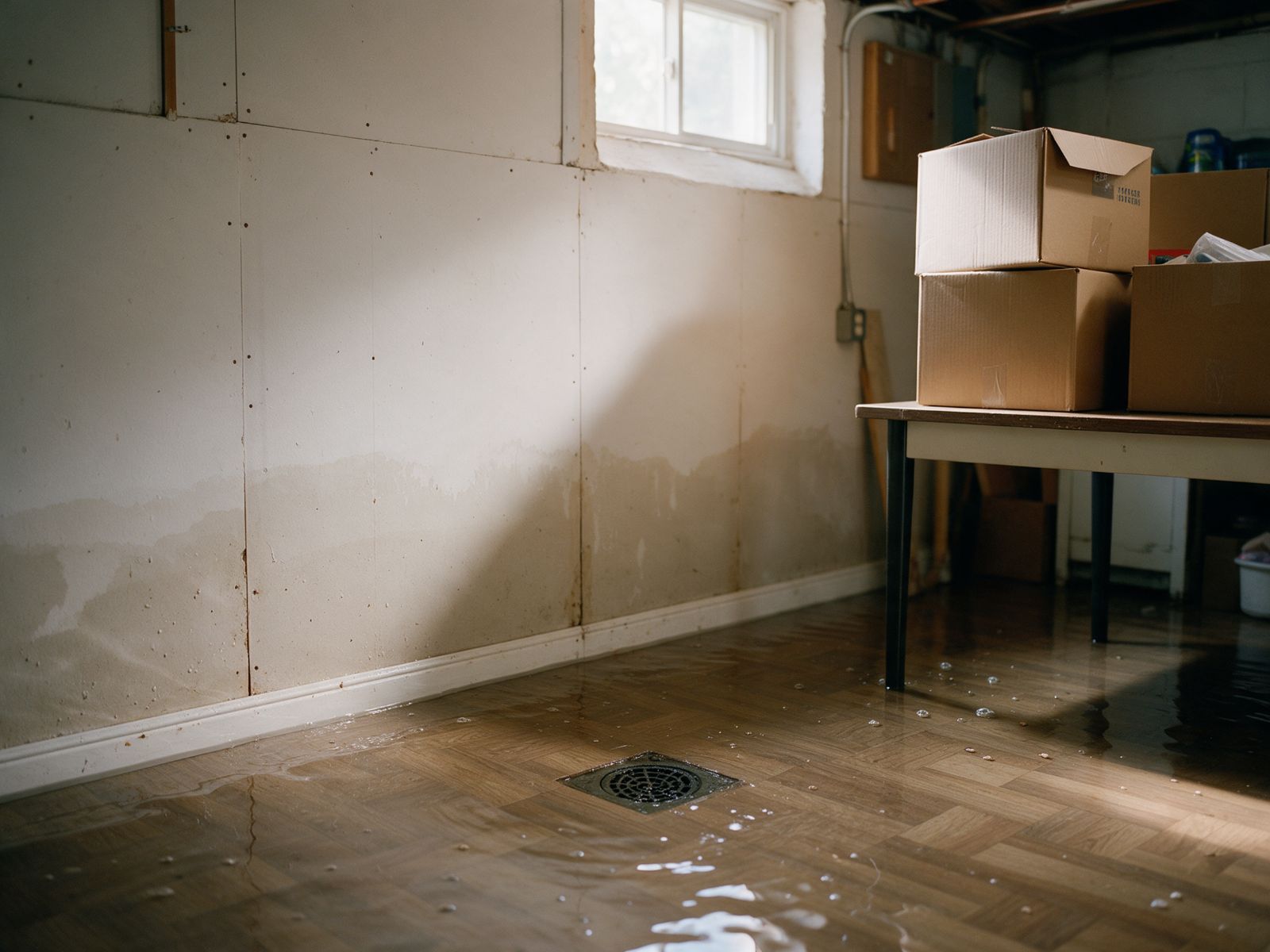
A floor drain that gurgles, a hairline crack in the slab that starts to shine, a dark line creeping along the base of a block wall: basements tell you they are flooding before the water arrives in volume. Flooded basement repair in Toronto starts the moment you see any of it. The cause decides the job. Water from a burst pipe is one problem, water from the storm sewer is another, and groundwater coming through the foundation is a third. We work out which one you have before deciding what needs to come out and what can be dried.
If water is still rising, keep yourself out of the basement. Floodwater can hide a live outlet, a submerged extension cord or an appliance plugged in at floor level. Shut the main water valve if a pipe could be involved. Turn off the furnace and water heater only if you can reach the switches without standing in water. Do not run the washer or flush toilets if sewer backup is possible, because whatever goes down the drain can come back up through the floor drain. Move what you can upstairs and photograph the waterline on the walls.
Storm surcharge is what happens when a heavy downpour overloads the sewers and the water has nowhere to go but back up the line into your house. Parts of Toronto still have combined sewers, carrying sanitary and storm flow in one pipe, and many older homes connect to them. The August 2018 and July 2024 floods are fresh in the memory of anyone with a low basement. Water that arrives through the floor drain or a toilet is sewer backup water, Category 3, which means it carries contamination and needs extra handling.
With Category 3 water we extract and dry, and we are plain about what that involves. Porous materials that sewer water has soaked, such as carpet, underpad, drywall, insulation and baseboard, usually have to come out because drying cannot make them safe. Sanitising the space or cleanup of sewage is not something we list as a service, so you may need a separate specialist for that step. We handle the extraction, the removal of wet materials and the drying, and we tell you straight which materials are staying and which are going.
Not every flood comes from the sewer. Older Toronto houses often have clay weeping tile running around the footing to carry groundwater away from the foundation. After decades those clay tiles crack, silt up or collapse, and groundwater backs up against the wall and finds the cove joint (where the wall meets the slab), a crack or a tie hole. Stone and rubble foundations seep through the mortar joints after long rain or a spring thaw. We find where the water is and where it has spread. Repairing the weeping tile or the foundation is work for a drainage or foundation contractor.
On site the job runs in a clear order. First, extract the standing water. Then take moisture readings and thermal camera images across the floor and walls to see how far it went. Carpet and pad past saving are removed, and drywall gets a flood cut at 2 feet or 4 feet depending on how high the water wicked. Wet baseboard and insulation come out. Then low-grain refrigerant dehumidifiers and air movers go in, and we take readings daily until the materials reach dry standard. Photos and readings are kept for your home insurance claim.
Several things set the price. How much water entered and what category it was. The square footage that is wet. How much finished material, such as carpet, drywall, laminate or insulation, has to come out. How long the water sat. How easy the basement is to get into. And how many days of drying equipment the building needs. A bare concrete cellar and a finished basement with a bathroom and built-in cabinets are very different jobs. We explain the price on site before work starts.
It is an emergency if water is still coming in, if it came up through a drain or toilet, if it is deep enough to reach outlets, or if there is any smell of sewage. It is also urgent when the basement walls are finished, because moisture climbs drywall and into the studs overnight. If you are unsure whether to call, call. Once the structure is dry and the immediate crisis has passed, look into the City of Toronto Basement Flooding Protection Subsidy Program, which supports protective work such as backwater valves. Check the current rules and eligibility with the City before you spend anything.
From our crew: Photograph the waterline on the walls and the water in the floor drain before anything is moved. Then check the lowest corner of the basement, because that is where water pools and where wall cavities stay wet longest.
Flood repair here usually draws on Water Extraction and Structural Drying, and when a pump failed during the storm, Sump Pump Failure. If a pipe let go, you will also need a plumber to repair it. If you are looking at water in your basement right now, call (226) 639-7972. We answer 24 hours a day, 7 days a week, in Toronto and across the GTA, from Etobicoke and Scarborough to Mississauga and Markham.
Basement Flood Repair Services We Offer
✓Storm Surcharge and Sewer Backup Water
Extraction and drying after water comes up through floor drains, with wet porous materials removed. Treating the space afterwards is a separate specialist step.
✓Foundation Seepage and Weeping Tile Water
We deal with water that has entered through cracks, joints and failing clay tile, and tell you where it is coming in.
✓Flood Cuts and Wet Material Removal
Drywall, insulation, baseboard and flooring that cannot be saved are cut out at the right height so the cavity can dry.
✓Finished Basement Flood Drying
Drying plans for basements with drywall, laminate, built-ins and bathrooms, where water hides behind finishes.
How it works
- 1
Find the source
We identify whether water came from a pipe, the sewer, groundwater or a failed pump, and set the category, because that decides what can be dried and what is removed.
- 2
Extract and expose
Standing water is pumped and extracted. Wet carpet, pad, baseboard and insulation come out, and drywall is cut at 2 or 4 feet so the wall can dry.
- 3
Dry the structure
Low-grain refrigerant dehumidifiers and air movers run in a closed space, while daily readings show whether concrete, framing and drywall are drying. Closing the space keeps humidity from drifting into the rest of the house.
- 4
Document and hand over
We give you photos, readings and a plain explanation of what was removed and why, ready for your claim and for the contractors who rebuild.
Pricing
Cost depends on how much water entered, its category, the square footage that is wet, how much finished material comes out and how many days of drying the building needs. The price is explained on site before work starts.