
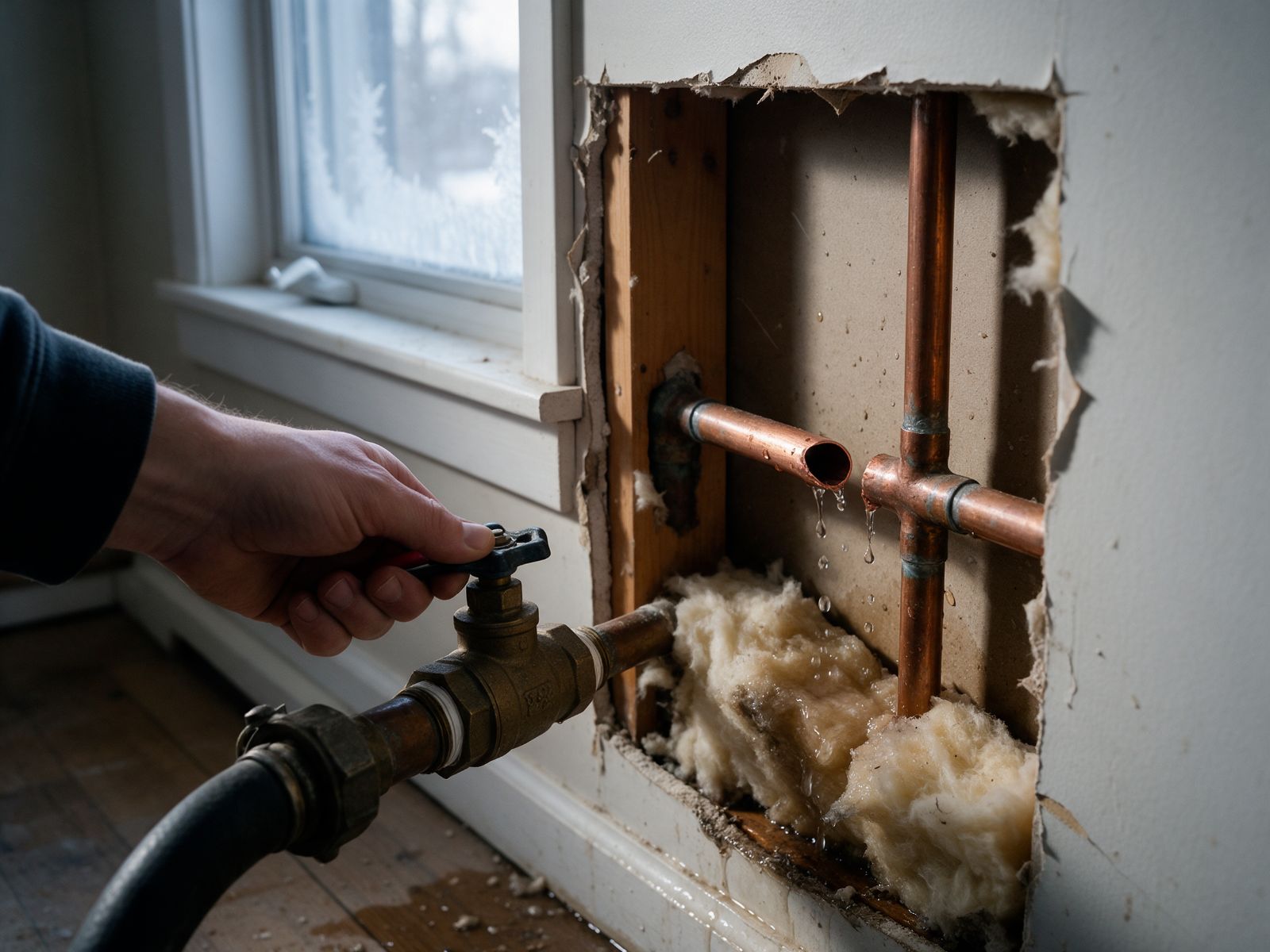
A hiss inside the wall. A steady drip from a ceiling light fitting. A spreading dark patch on drywall under a bathroom, or the sound of a tap running when every tap is off. A burst pipe rarely announces itself politely, and the water is often moving through the cavity between floors long before anything shows on a finished surface. By the time you see it, a surprising amount of water may already be inside the wall, the insulation and the floor system below.
Shut the main water valve first, before you phone anyone. In most Toronto houses it is near the front wall of the basement where the line comes in, often beside the meter. Turn it fully off, then open one low tap to drain the pipes and ease the pressure. If water is near outlets, lights or the panel, stay clear, and switch off power to the wet area only if the panel is dry and safe to reach. Move valuables up, take photos, and then call.
We do not repair pipes. A plumber has to fix the break, and the sooner the better, because we cannot dry a house that keeps filling. Once the pipe is repaired or the water is isolated, we take over: we extract standing water, find where it travelled, and dry the structure. Ideally the plumber comes first, but if you have water on the floor right now and the plumber is hours away, call us anyway. We can start extraction while the valve is off.
Toronto freezes cause a particular kind of burst pipe. During a deep freeze, a supply line in an exterior wall, an unheated garage, a crawlspace, a porch addition or a cold kitchen on the north side of a house can freeze and split. The pipe often does not leak while it is frozen. The damage starts when the weather warms, the ice melts and the split opens up, which is why a flood can appear on the first mild afternoon after the cold snap, sometimes while the home is empty.
Not every burst is a dramatic split. Pinhole leaks in older copper pipe spray a fine mist for weeks inside a wall before a stain appears, and a failed supply line, such as a braided hose under a sink or behind a toilet, can empty a lot of water onto the floor quickly. Dishwasher and washing machine connections fail the same way. Each of these soaks drywall, insulation and flooring differently, and the first job is working out how far the water went, not just where it came out.
The work starts with extraction. Submersible pumps and extractors take the standing water off, then moisture meters and a thermal camera show where it went, including inside the wall cavity and under baseboards. Wet insulation and sagging drywall are cut out, usually with a flood cut at 2 or 4 feet, and ceiling sections below an upper floor leak may have to open too. See our Water Extraction and Structural Drying services for what happens next. Photos and readings are logged for your insurance claim.
Drying is where the job is won or lost. Air movers and low-grain dehumidifiers run, usually for several days, and we take readings every day until studs, joists and subfloor reach dry standard. Closing a wall too early traps water and invites mould, and mould removal is a separate specialist job we do not do. When the readings are good, you can have the opened walls rebuilt, and your plumber will already have fixed or replaced the failed section.
The price depends on how much water came out, how long it ran, whether it is clean supply water, how many rooms and floors it reached, what has to be removed, how hard the area is to get to, and how many days of equipment are needed. A burst on a main floor with water through the basement ceiling is a bigger job than a small supply line leak caught quickly. We explain the price on site before work starts.
Call at once if water is pouring, if it is coming through a ceiling, if the area is above living space or electrical equipment, or if a freeze has left several cracked lines. If a pipe burst while you were away, assume the water has been running for hours and that the damage has gone further than the stain. Do not wait until the weather warms to find out what froze, and keep the heat on in unoccupied rooms during cold snaps.
From our crew: Open one low tap after you shut the main. It drains the line and drops the pressure so the break stops feeding the wall. And write down which pipe froze: the next cold snap, the same exterior wall or garage run is going to freeze again.
For burst pipe water damage anywhere in Toronto, Mississauga, Brampton, Vaughan, Markham or the rest of the GTA, call (226) 639-7972. Someone picks up at 2am as readily as at noon. Shut the main off, call your plumber for the pipe, and call us for the water. If you are not sure whether the pipe has stopped leaking, say so on the call and we will talk you through what to check while the crew gets ready.
Burst Pipe Water Damage Services We Offer
✓Frozen Pipe Flood Response
Extraction and drying after a freeze in an exterior wall, garage, crawlspace or porch addition splits a line.
✓Pinhole Leak Damage
Opening and drying walls where a slow leak in old copper pipe has been soaking the cavity for a long time.
✓Supply Line Failure Damage
Extraction and drying after a failed braided hose or connection at a sink, toilet, washer or dishwasher.
✓Wall and Ceiling Opening for Drying
Cutting access in walls and ceilings so trapped water and wet insulation can be removed and the cavity dried.
How it works
- 1
Isolate the water
The main valve is shut off and your plumber deals with the pipe. We confirm the water has actually stopped before we start extraction and drying work in the house.
- 2
Extract and map
Pumps and extractors remove standing water, then the moisture meter and thermal camera show where the water travelled inside walls, floors and ceilings below the break.
- 3
Open and dry
Wet insulation and board are cut out, and air movers and dehumidifiers run, with readings logged every day on studs and joists until they reach dry standard.
- 4
Hand back
You get the readings and photos for your claim, and we tell you when the opened walls and ceilings are dry enough that they can safely be rebuilt.
Pricing
Cost depends on how much water escaped, how long it ran, how many rooms and floors it reached, what must be removed and how many days of drying equipment run. The price is explained on site before work starts.