
2026-10-01T11:09:03.349Z ·
What to Do in the First Hour After a Basement Flood in Toronto
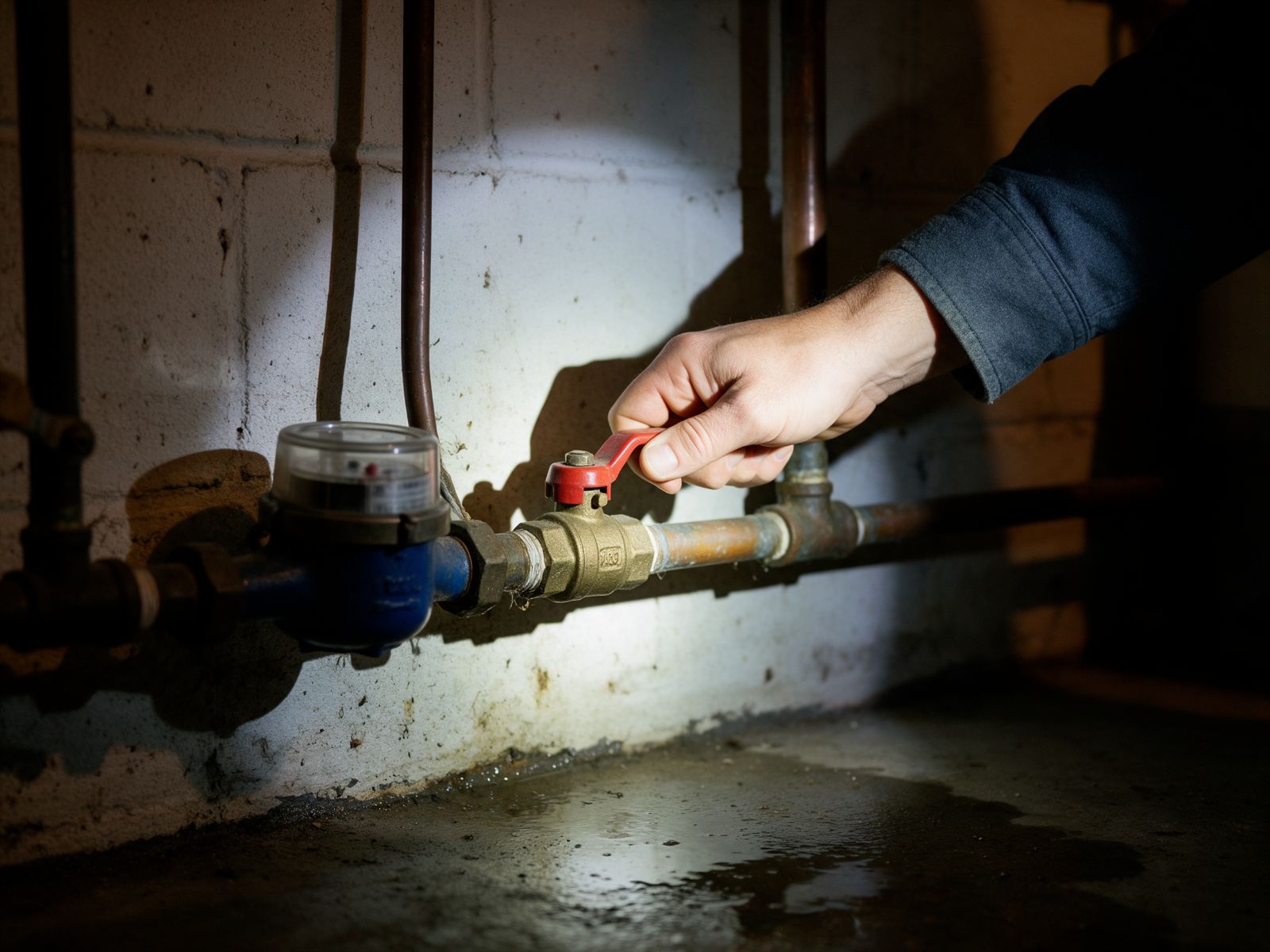
You come downstairs and the carpet squelches under your feet. Or there is water creeping across the concrete from a floor drain, or a sump pit is overflowing in the middle of a storm. The first instinct is to start moving things and mopping. Hold on for a moment. The order you do things in matters, and a few of them are about safety, not about saving the carpet.
Start with the source if you can find it. If the water is coming from a pipe, a water heater or a washing machine line, shut the main water valve. In most Toronto houses it sits near the front wall of the basement, where the line from the street enters, and it often has a round wheel or a lever handle. Turn it fully off. If the water is coming in from outside, shutting the valve will not help, so move on to safety.
Next, think about electricity. Water and live power is the real danger in a flooded basement. Do not wade into standing water if it could be touching outlets, a power bar or the electrical panel. If the panel is dry and you can reach it without stepping in water, switch off the breakers for the wet areas. If you cannot reach it safely, stay out and call us or your electrician for guidance.
Now look at what the water is. Clean water from a supply line is one thing. If it came up through a floor drain and smells like sewage, treat it as contaminated: keep children and pets out, wear boots and gloves if you must enter, and call a plumber and the City of Toronto about the backup. Many older parts of the city have combined sewers, which can push water back into basements during heavy rain, as happened across the city in August 2018 and July 2024.
Once it is safe, get valuables off the floor. Lift electronics, boxes, photo albums and paperwork onto shelves or upstairs. Pull up furniture and prop it on blocks if it is too heavy to move, and take rugs and loose items out of the wet area. Do not try to carry large amounts of soaked furniture through the water alone. Your back is worth more than the couch.
Take photos and video before you change anything. Capture the water level on the walls, the stained areas, the items that are wet and the source if you can see it. Note the time you found it. This feels like paperwork at a bad moment, but if you make a claim through your home insurance, a clear record from the start is useful. What your policy covers depends on the policy and the cause.
Resist the temptation to run a household vacuum or a box fan. A household vacuum is not built for water and can shock you. A single fan blowing across a wet basement moves humid air around without removing it, which can push moisture into drier rooms. Opening windows in humid summer weather can make things worse, not better. Leave the drying to equipment made for it.
Then call for extraction. Standing water goes first, because every hour it sits it soaks further into drywall, insulation and flooring. We pull it out with submersible pumps and extractors, take moisture readings to see how far it has spread, and set up dehumidifiers and air movers to finish the job. Call (226) 639-7972 and we will talk you through the next steps while you wait.