
2026-09-23T11:09:03.349Z ·
How Long Does Structural Drying Take After Water Damage?
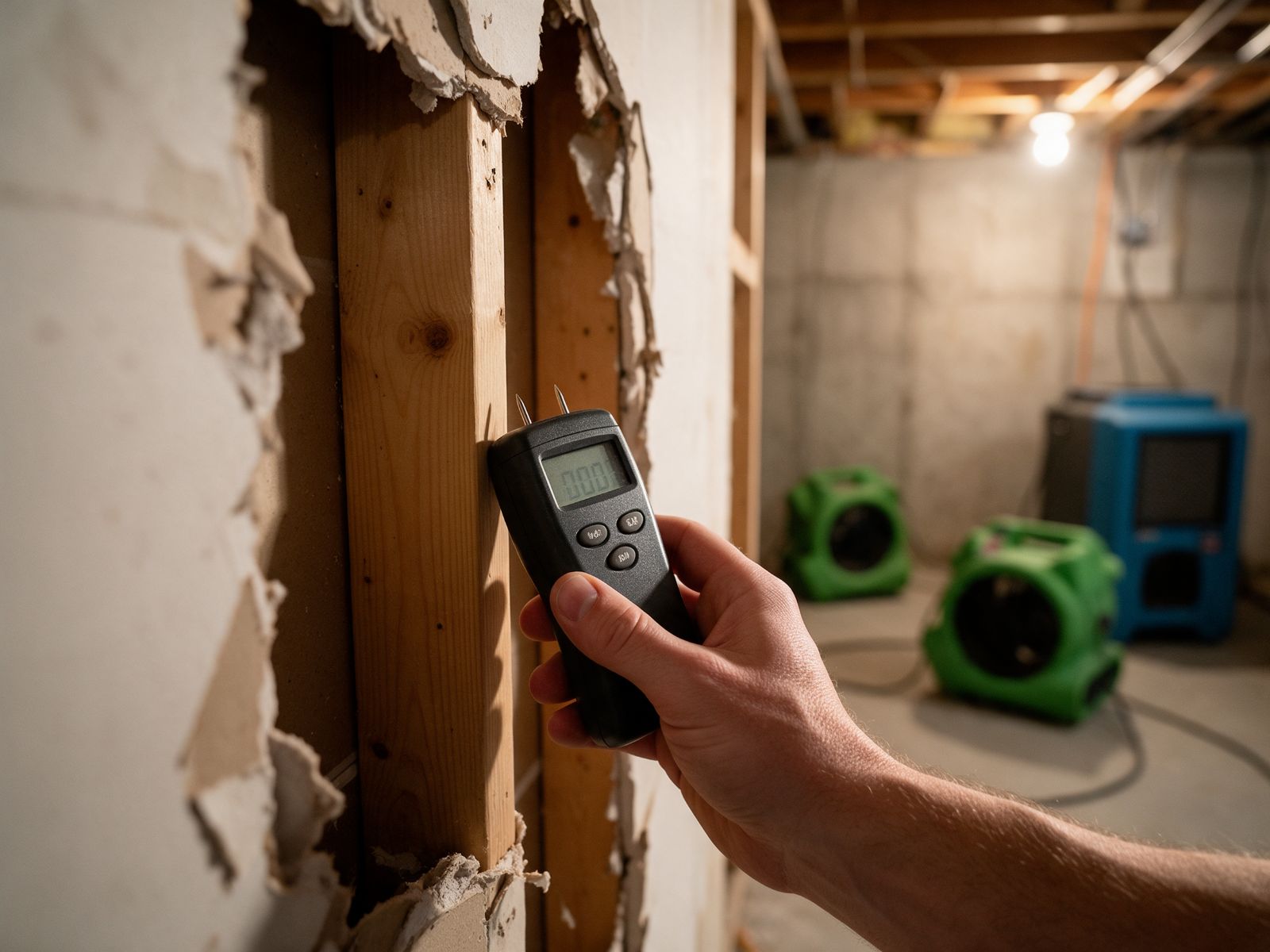
People often ask how many days until the fans can go. It is a fair question, because the equipment is loud, the house is warm and everyone wants the basement back. The honest answer is that it depends, and the number you hear from a neighbour or a website is only a rough guide. What decides it is the building, the water and the weather.
Start with the materials. Drywall and wood framing release moisture reasonably quickly when they are opened up and given airflow, often over several days. Hardwood flooring, plaster, thick wood subfloors and concrete are slower, because they hold water deeper and give it up gradually. Insulation and carpet underlay act like sponges and are usually removed instead of dried. Wet hardwood can also cup and buckle if it is dried too fast or too slowly.
Next is how much water there was and how long it sat. A small supply leak caught the same day wets less material than a flooded basement that stood overnight. Water that has been in drywall and framing for several days has soaked higher and deeper, so more of it has to be removed or dried. Early extraction shortens the job because there is less moisture left to deal with.
Then there is the space itself. A sealed basement with no airflow dries slowly. A house in a humid July holds more moisture in the air than the same house in a dry January, and drying equipment has to work harder against it. Toronto winters have the opposite problem: cold concrete and foundation walls stay cool and can hold dampness longer than the rest of the house.
The drying itself is controlled. Air movers push dry air across wet surfaces to pull moisture out, and low-grain refrigerant dehumidifiers take that moisture out of the air so it does not settle somewhere else. Standard household dehumidifiers and box fans are not built for this job, and they cannot keep up with the volume of water that comes out of a wet building.
We do not guess when it is finished. We take moisture readings on materials with a meter, compare them to a dry reference reading for that material, and record them each visit. A thermal camera helps find damp spots behind surfaces. If a reading is still high, the equipment stays and we adjust where it sits. We only remove it once the readings are at a dry standard.
Where drywall was cut at 2 or 4 feet, the wall cavity is dried before anyone talks about closing it up. Closing a wet wall is how people end up with musty smells and peeling paint weeks later. If mould is already present, that is a job for a mould specialist, not for a drying crew, and we will tell you if we see signs of it.
While the equipment runs, you can help. Keep doors to the wet area closed so the dehumidifiers work on the right space, do not turn the equipment off to save noise, and leave the thermostat where it is. Do not stack boxes against drying walls. The price is explained on site before the work starts, and the number of days of equipment is one of the things that drives it.
So, how long? Often several days for a typical wet drywall and framing job, and longer when hardwood, plaster or concrete are involved or the water sat for a while. The real answer is whatever it takes for the readings to come down to dry. If you have water damage in Toronto and want to know what yours will need, call (226) 639-7972.